“Why Would They Lie?”
Entire collections of philosophy books exist that provide a multitude of variations of reasons that people can figure out to lie. The truth is, without an investigation into a topic, “why would they lie?” is typically observed these days as a dishonest person‘s excuse for not doing the investigation at all, rather than the actual absence of a motivation of deception, I’ve noticed. The truth is, every lie has it’s own specific motivation; and if a general motivation among all deception exists at all, it’s to control the believer’s behavior to a desired outcome.
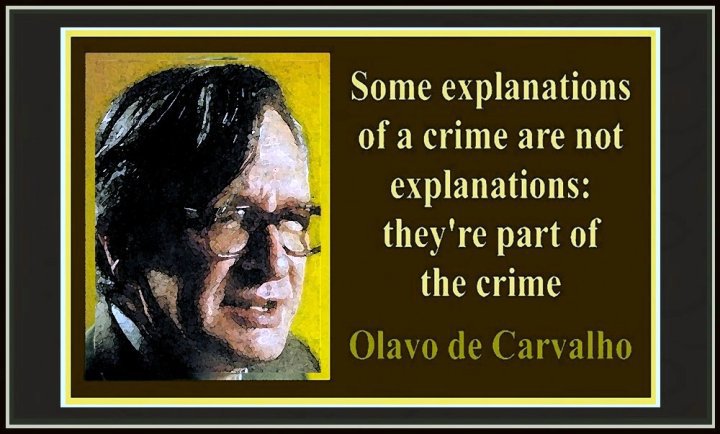
Let’s observe, for example of demonstration, a non influential, run-of-the-mill deceiver. A regular type many might even have past experience with (or at least we know someone it’s happened to), who meets with his side mistress on the weekends; while telling his wife he’s at the golf course. With this simple example, we can clearly see that the golf course deception exists, because the wife’s behavior would likely be something completely different if she knew the truth.
This is the same generally with every deception. Our reactions and responses are not the same in the fantastical wonderland of belief, as they would be if the truth were actually understood in the place of the deception. If someone were to come over to visit while he was at the “golf course”, and ask the wife “where is your husband?”, would she actually be able to tell them the truth? How can it even be possible for her to speak a truth she doesn’t actually know? “Knowing” only a falsity herself (belief), it’s not even possible for her to speak the truth for an answer.
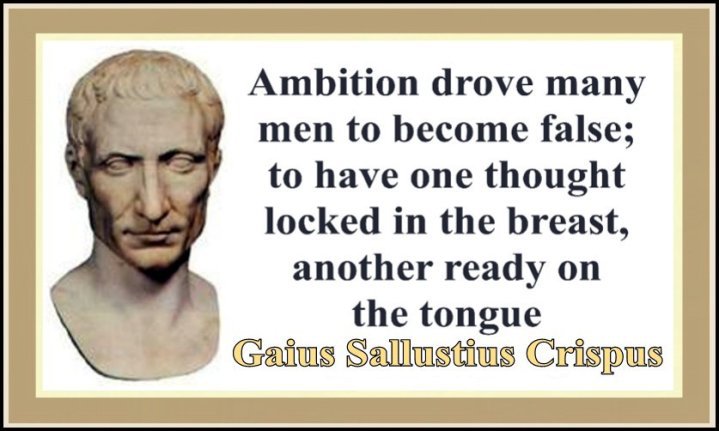
A dishonest man or woman does not need an honest reason to lie. Lies and falsehoods are survived by dishonest reasonings, so trying to figure out an honest reason is both fruitless and pointless, in any event or investigation. The truth is, there isn’t an honest reason behind any deception. The honest reason behind every deception is that the deceiver is dishonest, and that’s about it. And it’s not even us out here they’re necessarily being dishonest with, but themselves. It is the distinctive quality of dishonesty to project illusion for the outside to perceive and believe, rather than just saying (and being) what’s actually true. As the demonstrated example exposes, we don’t even need to be the liar to say false things, sometimes all that’s required is believing the liar, and parroting the falsehood we didn’t bother to actually confirm.
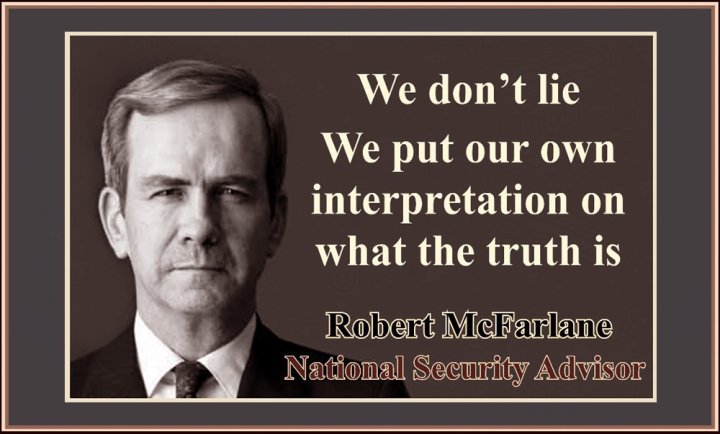
McFarlane does well there to demonstrate the dishonesty required to be involved in government at a high level. Putting “our own interpretation on what the truth is” could perhaps even pass in a psychiatric dictionary for the exact definition of “delusional psychosis”.
The actual truth of a matter is always one specific thing, and all other interpretations are false. No truth can ever possibly be two contradictory things simultaneously, it is the truth and everything else is false and half-truths. The sun cannot be both hot and cold, it can only possibly be one or the other. Putting “my own interpretation” on it to say “the sun is cold” is lying; the sun doesn’t magically become cold because I said so, it’s still hot and my words are still false. So yes, putting our own interpretation on what the truth is – is, in fact, lying. The only possible honest projection of any affair, is the actual (and full) truth of it. All other projections are dishonest.
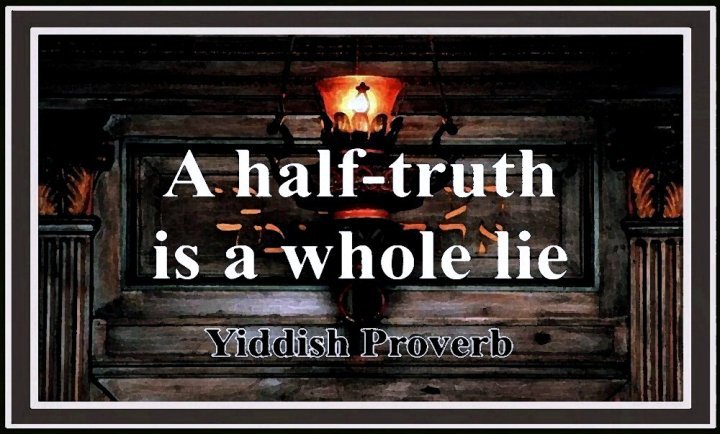
The half-truth might be one of the deceiver’s greatest alibis because it establishes a false sense of trust – used car salesman do well to adopt the half truth technique, telling us everything “good” about the vehicle, and conveniently leaving out the “bad” that might cause us to change our minds. Yes, the “good” they said is actually true, however leaving out the “bad” that might affect our judgement is dishonest. To counter this deception technique requires rigorously asking honest questions, and not being satisfied with any answers that could possibly be false. Demand actual demonstrations rather than just the hollow air of surface words. The truth always shows it’s face when we dig for it honestly; in reality the deceiver cannot actually hide the truth from an honest investigator, but can only direct our attention away from it with the fantastical ews and ahs of their illusion.
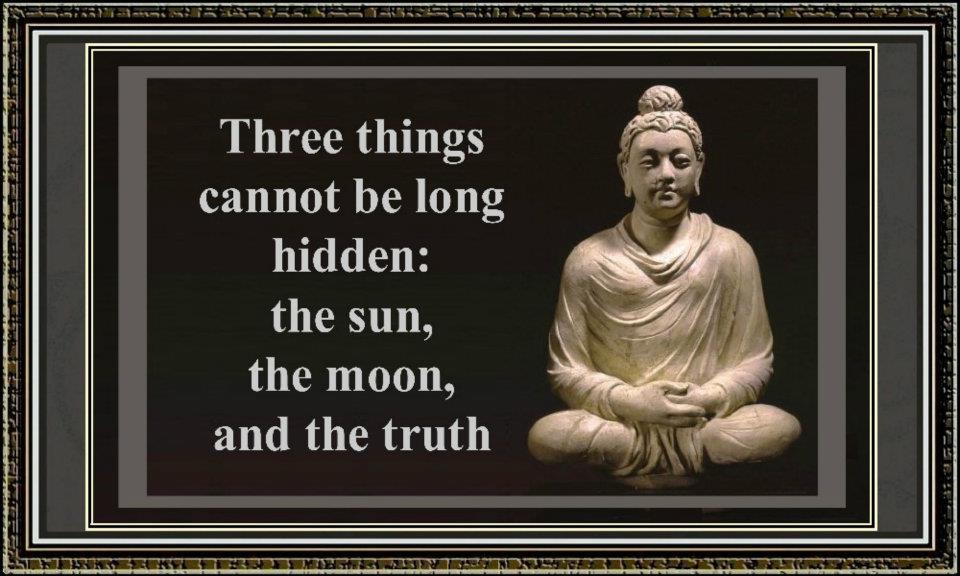
It requires us to sacrifice our integrity and it’s need for understanding the actual truth of an affair, to believe any proposition which holds any possibility of being false. If the possibility exists that a thing might be false, it is dishonest to value it as a truth. That (thing) might even actually be the truth, but we, the truly honest, aren’t going to value it until that contradictory possibility is completely eliminated. The highest level any idea could possibly obtain in our minds, without evidence as obvious as the sunrise, is “probable”.
By understanding this, we can see quite clearly that the most common real reason people lie, is because other people actually desire being lied to. People believe things that are (possibly) false all the time; no honest investigative questioning whatsoever, just blind belief and infatuation with the deceiver’s illusion. People lie particularly because there is such a high demand for it. People lie particularly because the truth isn’t good enough for the dishonest mind, it needs more; it needs ews and ahs and fascinated, and typically the truth doesn’t satisfy these demands. Typically, the truth is boring, painful, and points the finger at things that I can be doing better. That’s not what the dishonest mind wants to see and hear, though. The dishonest mind wants to avoid it’s own accountability and blame everything else. The dishonest mind just wants to hear about how everyone and everything else are the problem in their own lives, but never themselves. Truly, a propagandist or deceiver can only possibly cater to the dishonest who want to hear it.
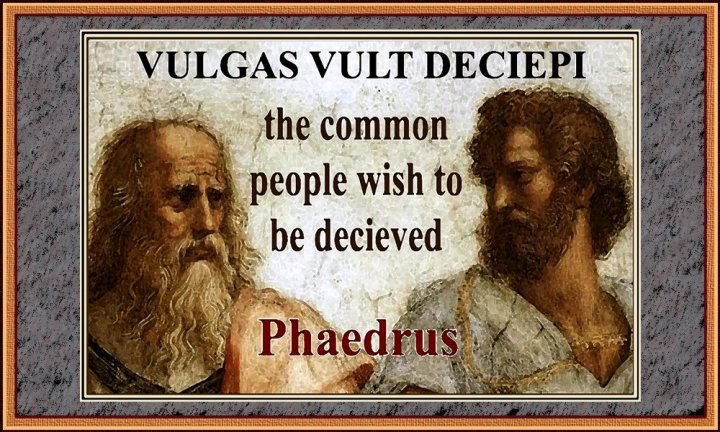
Have you ever thought about any of the times you found out that someone lied to you – and you went back in your head from the beginning, going over everything that was said and done, line by line and step by step, that caused you to become deceived? Isn’t it interesting how when we do this, it’s perfectly clear that our bodies and minds were actually sending us the right signals, and we ignored them. We ignored them because at that time, we wanted to believe the lie more than trusting our own selves, didn’t we? Isn’t it interesting that, no matter how much we wanted to blame the deceiver (far later and after the damage is done), we really only have our own selves to blame for becoming deceived at the end of it. By honestly paying attention to the calling of our own authentic selves, we could have avoided that pain. And we really need to start taking some responsibility for our own selves around here.
This general desire to be lied to is a significant major hurdle for human integrity and honest progression. It must be replaced by a deep seeded demand for the actual truth, that no fanciful illusion can possibly satisfy. No matter what situation you thought of in the previous example, it’s guaranteed that – if you went back to those scenarios, and instead of blind and fanciful belief in the deception, instead you asked honest, hard, and integrity challenging questions – you could have avoided it. You know it, I know it, and the deceiver knows it too.
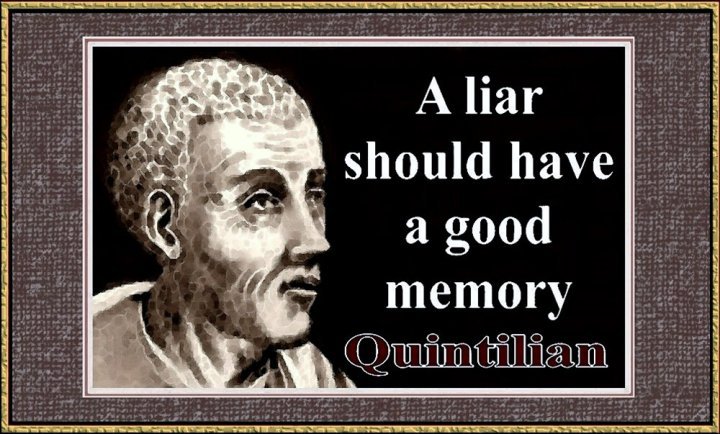
The ‘white lie’ is often considered harmless by the dishonest, and sometimes “manners”. In reality, the most crafty deceivers use white lies as a measuring stick to gauge exactly what they can get away with from the ignorant believer. In reality, they actually are harmful, and the idea they’re harmless is just another lie the dishonest sold themselves on once again; to pretend it’s not dishonesty generally (whether measured with a microscope or seismograph is irrelevant) that’s the problem with human integrity. Integrity does not allow for any dishonesty period, large or small – absolutely no falsity can possibly pass for “honest communication”.
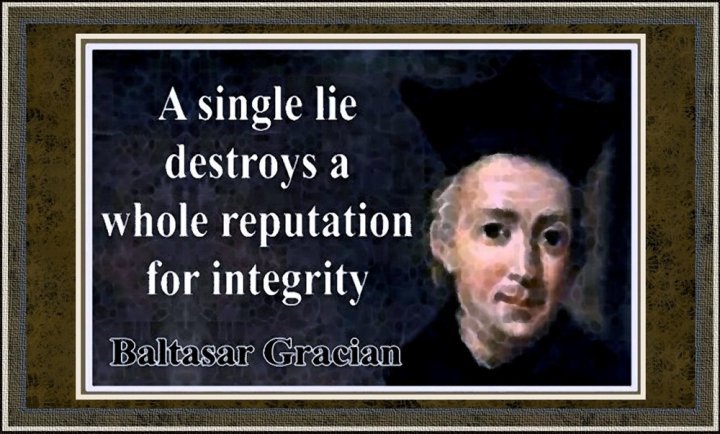
All dishonesty, large and small, is a conscious choice. In any event of dishonesty, the dishonest individual also had the opportunity to be honest, and made the other choice. There’s an entire smorgasbord of dishonest reasonings they might use to convince their own selves that their dishonesty is necessary or beneficial. These are just illusions of legs for the dishonest individual to stand on, however. In reality, there is no honest reasoning to be dishonest period. In fact, honesty must be sacrificed just to entertain dishonesty.
“Why would they lie?”, they say. Well the most obvious reason is because there’s such a high demand for it; and stopping the lying starts with you and me, the individual. Stop lying. Stop believing liars and parroting their illusions. Demand the truth. We honest have to plant our feet firmly in the ground of the truth only, no illusion can possibly satisfy the rigorous testing of honest skepticism and observational analysis. Truth is Mount Everest in a gust of wind, it’s not going anywhere by asking honest questions, investigating claims, and experimenting our hypothesis – and in fact becomes even more obvious in these endeavors. We must each do our part individually to make sure that we aren’t ourselves contributors to the reason people lie.
 TIAPROIS