On Bias and Bigotry
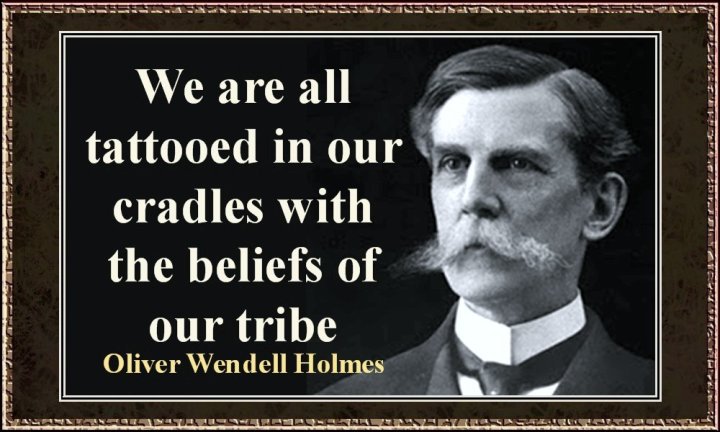
Dictionaries generally describe a bias as a favoritism to a particular idea. What the dictionary doesn’t do well to describe, though – are the how’s and why’s, the in’s and out’s, and the implications they have on the direction of human thought.
Where do biases come from?
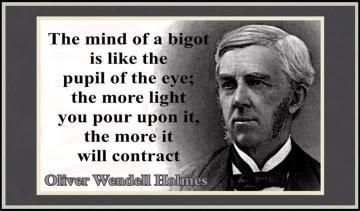
A distinctive amount of bias originates in the mind exactly as Holmes described above, and comes from our parents, community, and culture. Religious bias is one of the most obvious examples of this phenomenon – no matter if a Muslim or Hindu, or Buddhist or Christian or Jewish or any other religion – they each think they are the correct religion and all of the others are incorrect. However, in reality, no truth can actually be two different contradictory things simultaneously (that pan on the stove is either hot or cold or neither, but can’t be both); so the truth is, only one ( if any) of these things can possibly be correct – and all of the rest of them are false. So how is it possible to convince that group over there of something completely different than this group over here, with such firm conviction? Neither of them have any doubt whatsoever that they are correct and everyone else is false – and this is particularly the problem with it.
The indoctrination of bias is accomplished by training the children from a very young age to recite and parrot the bias, rather than teaching them how to think and use their own brain. It’s accomplished by disciplining the children with punishments for being disobedient to the bias. Eventually the bias becomes second nature and almost instinctual.
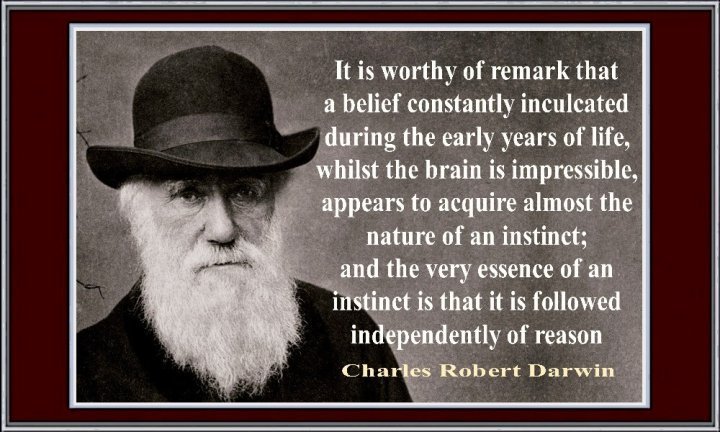
Also noticeable, is that sometimes a lifetime bias is developed not by our parents, community, or culture; but in spite of them. Perhaps we notice some particular flaw or unfairness with what is attempted to be taught, and in rejecting it we form what’s called an “anti-bias” in our discontentment with it. Even so, the same natural law Darwin describes above still applies to this, as those biases were formed in the mind prior to our actual ability to use our own adult thinking minds to determine the correct answer for our own selves (autonomy). Even these seemingly instinctual biases must be revisited as a rationally thinking adult with the focused effort of honest critique.
“It’s how I was raised” might be a foundational starting point for many biases, and in many cases the very genesis for the existence of bias in an individual in the first place; but really, a bias can come from anywhere, even (and especially) an individual’s own mind. It’s, in fact, quite a common psychosis among the dishonest; people will literally make up a scenario in their head and run with it like it’s the truth, simply because it’s the idea they want to believe (bias). People will believe an obviously raving lunatic, simply in the bedazzlement of their hypnotic illusion – believing it singularly by the desire for it to be true rather than the idea having any actual factual merit (cults). As several philosophical minds over history have pointed out repeatedly, people will believe whatever they want to believe. In short, belief is generally described in philosophy as a lazy and dishonest thinkers substitute for actually knowing.
Why/How are biases harmful?
“Who cares?” they say. “What does it matter if I’m biased?” “What does it hurt to favor one idea over another?” Well, for starters, let me tell you this: no truth in existence is going to magically sway to our liking, or magically become false by our disliking. No matter what topic of discussion, the truth of it is it’s own entity, and human desires and favoritism another. So it can only be an ego problem to think the truth of a matter magically becomes false because I don’t like it, or that falseness magically becomes true because of how it makes me feel. That’s not reality. In reality the truth is what it is, and the only way to get to it, is the honest diligent effort at knowing it. For good or for bad, no matter how it makes us feel, the honest mind’s desire favors the truth only.
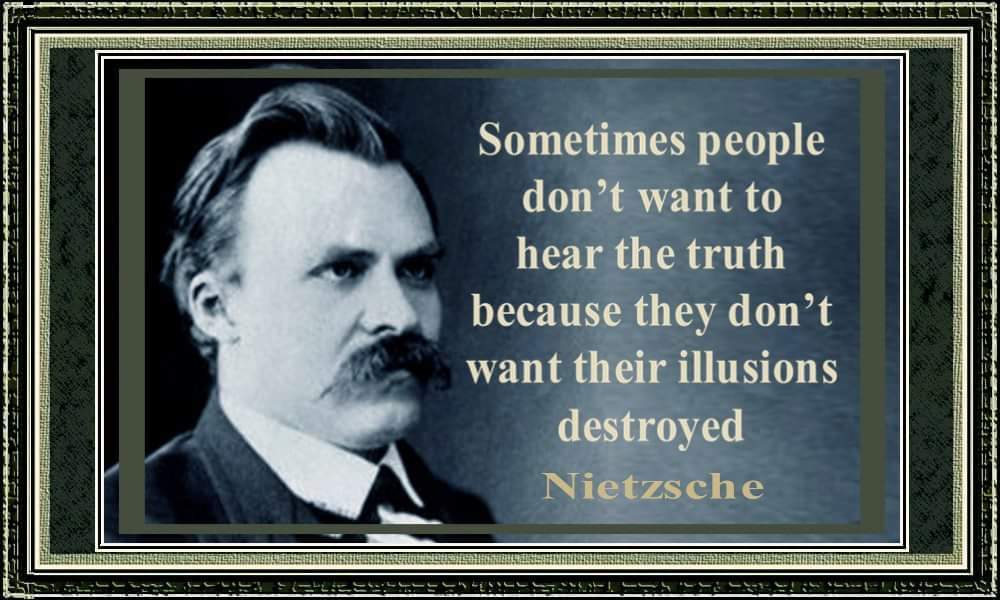
Sometimes the truth of an affair isn’t what we want it to be, is it? Sometimes it’s that other thing, that we were hoping it wasn’t. Sometimes it’s painful, and hard. Sometimes, it isn’t even really the truth of the matter that we are running from by leaning on our cherished biases, but the pain the truth delivers.
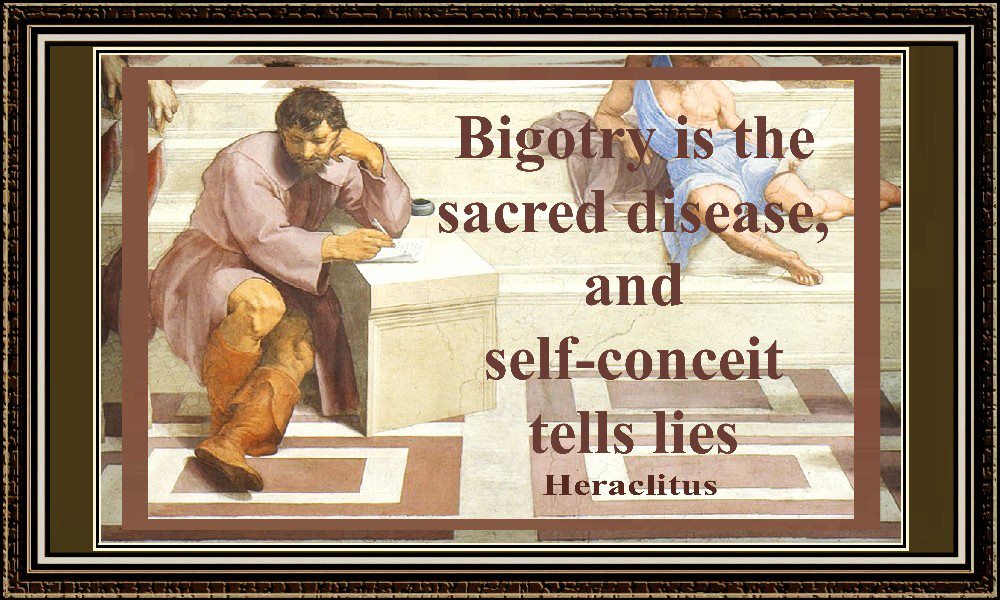
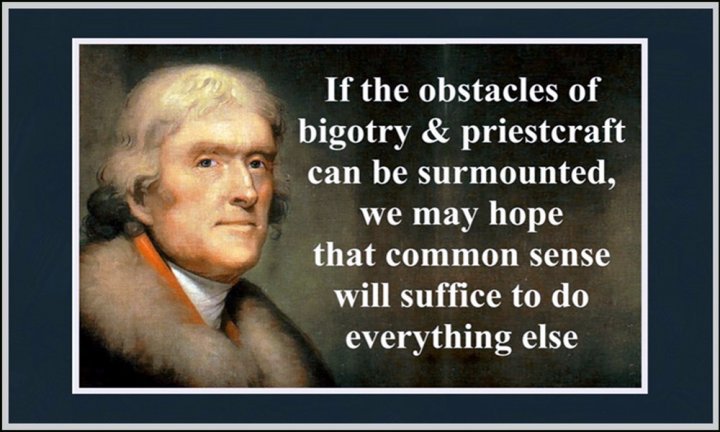
Bigotry is an amplified phenomenon of bias and has been generally described by philosophers as the most important mental hurdle that mankind must leap if we are to actually see any real progress on the side of human integrity. Where a bias symbolizes a likeness or favoritism to an idea, a bigotry symbolizes a deep infatuation and even love with it – and so much so, that the believer develops feelings of hatred and contempt for the “other side” of the affair; and even, in fact, all sides that aren’t their own beloved side.
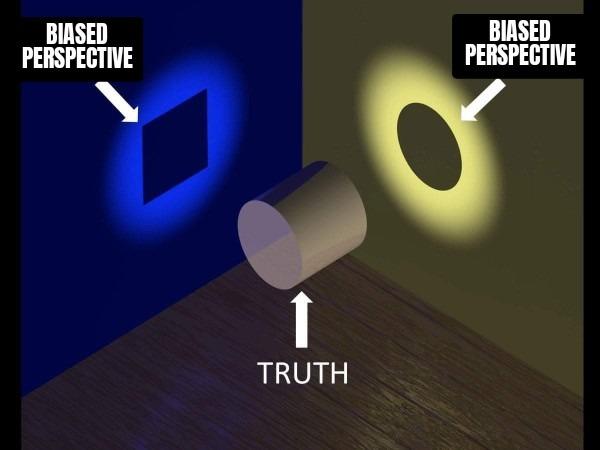
I got the above graphic off the internet and added my own words. The original graphic said “true” where my graphic says “biased perspective”, and I’m going to tell you why I changed it. I changed it because biased perspectives are not true. A thing must be the truth to be true. At best, a biased perspective can only possibly be a half-truth, and leaving out the other half is dishonesty that exposes my own falseness. This graphic does well to demonstrate the harm of biased perspectives, as a believer in the bias progressed to the point of bigotry would reject even the truth if they were deeply infatuated and in love with the bias. After all, some people have even signed up for wars, crusades, inquisitions; both dying and killing for their biases and bigotries.
So, with the light projected to the right, we get one shadow – and with the light projected to the left, we get a completely different shadow on the exact same object. What’s interesting about this phenomenon, is that there’s a Baskin Robbins 31 flavor smorgasbord of examples of this to observe in the political medias. They literally call each other “leftists” and “right-wingers”. D’oh!
What the graphic helped me with visualizing is that, of any topic of discussion there exists only a single truth, and all of the other perspectives can only possibly be biased perspectives. The bias might be “right” but it can never be the “truth”, the understanding of which requires the accounting for all observations honestly. Just think about it, and say this audience over here in this theater was shown one shadow, and another audience over there shown the other shadow. Then, after being allowed to mix and mingle in the foyer and discuss the shadows for a half hour or so, they each answer a single question quiz “what’s the shape of the object”?
Of course, it’s clearly obvious that there’s going to be three answers – One group will say the lit object was a sphere or ball – another one will say the lit object was a cube or box – and the last group, who are intellectually wise enough to be able to account for all perspectives honestly, even the one’s that disagree with their own observations, will have the honest thinking brains to deduce that the object was a cylinder. No other shape can possibly cast both shadows at the same time. In most cases, the actual truth of an affair will show both “sides” both correct and incorrect. In all cases, the actual truth exposes the falseness of all other claims.
In fact, it’s kind of obvious that, we actually have to ignore opposing perspectives (ignore-ance) in order to maintain a false bias. “It was obviously a sphere, idiots!” said the bigot. “It was obviously a cube, stupid!” said the bigot. It is in the honest accounting for all perspectives that the whole and actual truth of the affair can be visualized and fully understood. Dishonestly disregarding and rejecting even the potential legitimacy of opposing perspectives, prevents the actual truth from being understood. It does not matter the topic of discussion, bias and bigotry are firewalls of the mind preventing the understanding of the actual truth.
To be unbiased and true to integrity means to honestly account for all perspectives in a matter, and with rigorous investigation; leaving absolutely nothing out for fear of leaving the truth out, which integrity cannot accept. It means we don’t ignore things because we don’t like it, or disregard an observation because we didn’t see that for ourselves. It means there’s typically much more to the truth than what we’d like to believe or what’s been projected to us. It means absolutely no bias or illusion can possibly sway our need and/or derail our search for the actual truth.
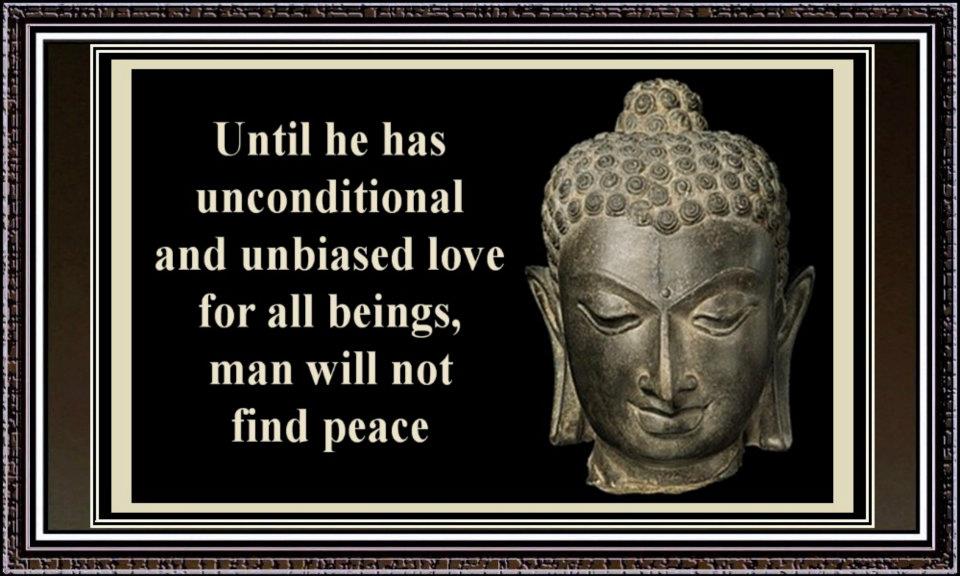
All we need to do is plug in the word “love” in the demonstrated graphic where the word Truth is, to understand the Buddha’s sentiment here. The polarity of love is hate, and if we’re only loving “our own kind”, it’s nothing but a recipe for perpetual wars of collective hatreds, being convinced by propagandists into destroying each other over and over and over again for all eternity. Is that really what anyone wants? Only the shareholders at the weapons manufacturing corporations could possibly have any reason for wanting this, and it’s not even a legitimate one, because that result lines their pockets. The rest of us want peace, love, and unity in integrity. Don’t we?
If we do, we must evaluate within to assure that we aren’t ourselves contributors to this disease, this mental plague on the minds of human beings. And if we are, to actually desire being better and viewing things honestly, not blocking out opposing perspectives; but making the focused effort to understand them fully and how they might work with, rather than against, our own observations. That puzzle piece we’re blocking out might just be the piece we’ve been waiting on for our entire lives.
 TIAPROIS